🍃 Natural Health and Wellness
Advertorial
Advertorial | Health News | Macular Degeneration & Vision Loss
Age-related Macular Degeneration:
Harvard Scientists Reveal A New AMD Treatment That Restores Sharp Vision In Just A Few Weeks
Health News Report | Vision Research Update | Updated 2h ago
According to world-renowned ophthalmologist Dr. Ming Wang, researchers discovered a hidden cause of AMD have been overlooked for decades — and a powerful compound found in wild Nordic blueberries that may help regenerate key cells in the retina, allowing thousands of seniors to support clearer, sharper vision again.
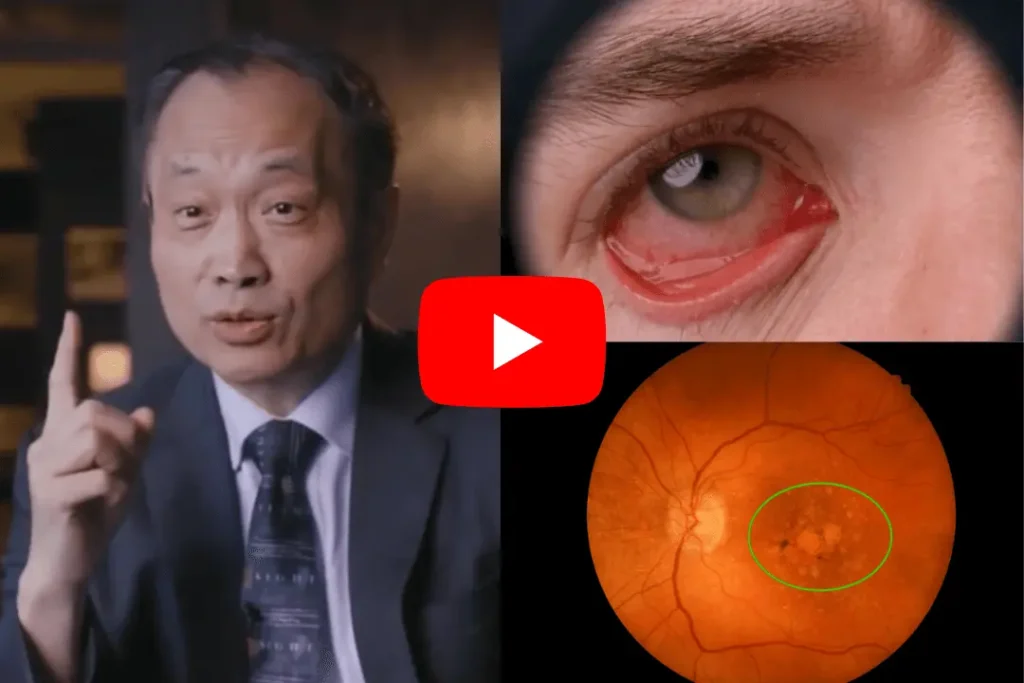
- Presentation available while current patient slots remain open
6000 people watching now.
Free · Harvard-partnered research
You May Have Already Noticed These Early Signs…

Does This Sound Like Your Life?
- Words on a page becoming harder to read
- Straight lines appearing slightly wavy or distorted
- Faces becoming harder to recognize
- A blurry or dark spot forming near the center of your vision
- Headlights appearing unusually bright while driving at night
- Difficulty reading small print on labels or phone screens
For years, many eye doctors have recommended AREDS2 supplements to help support retinal health. If you or someone you love has been diagnosed with macular degeneration, you may have already noticed something concerning. Your vision doesn’t simply remain stable.
For many people, it slowly begins to change. Sometimes so gradually that it’s hard to notice at first. But over time, the signs often become harder to ignore.
You may begin experiencing symptoms like:
- Words on a page becoming harder to read
- Straight lines appearing slightly wavy or distorted
- Faces becoming harder to recognize
- A blurry or dark spot forming near the center of your vision
- Difficulty driving at night
For millions of Americans over 60, these are early warning signs of age-related macular degeneration, a progressive condition that slowly damages the central part of the retina responsible for sharp, detailed vision.
But according to emerging research, the real cause behind this damage may not be what most people think.
In a short presentation, Harvard-trained ophthalmologist Dr. Ming Wang explains what researchers are now discovering about the progression of macular degeneration.
Why Most Macular Degeneration Treatments Fail To Stop Vision Loss?
Many people diagnosed with macular degeneration are given similar advice. Monitor your vision. Take a standard vitamin formula like AREDS2. Return for regular checkups.
But for millions of people, vision continues to slowly decline despite following these recommendations.
According to Harvard researchers, the reason may be that most traditional approaches focus on managing symptoms — not the deeper cellular damage occurring inside the retina.
For example:
- Glasses can correct focusing problems, but they cannot repair damaged retinal cells.
- Eye drops rarely reach the inner structures of the eye where degeneration occurs.
- Standard vitamin formulas may not deliver the nutrients needed to support retinal cell health.
This may explain why many people feel like they’re doing everything right — yet their vision keeps getting worse.
But according to emerging research, a different approach may be needed. One that focuses on supporting the cells responsible for maintaining clear central vision. And that’s where researchers began studying a powerful compound found in wild Nordic blueberries.
In a short presentation, Dr. Wang explains:
- Why macular degeneration affects millions of adults over 60
- Why many people following doctors instructions still experience vision decline
- The biological factor researchers are now paying closer attention to
- And a new treatment that is restoring sharp vision for AMD patients
You can watch the short presentation explaining these findings below.
Free medical presentation · The research your retina specialist never shared
The Hidden Cause Silently Damaging The Eyes Of Millions With Macular Degeneration
According to several eye health researchers, macular degeneration may be driven by a gradual breakdown of the delicate cells inside the retina. These cells are responsible for capturing light and sending clear visual signals to the brain. When these cells begin to weaken or deteriorate, vision in the center of the eye can slowly become blurry, distorted, or faded.
But what causes these cells to break down in the first place?
Some scientists believe that oxidative stress and light-related damage may play a much larger role than previously thought. Over time, this stress can slowly damage the retinal cells responsible for sharp central vision. Because the process happens gradually, many people don’t notice the damage until everyday tasks start becoming more difficult.
- Reading small text.
- Recognizing faces.
- Driving safely at night.
Recently, researchers began studying natural compounds that may help support the health of these fragile retinal cells.
One compound in particular — found in wild Nordic blueberries — has been attracting attention for its potential to help support retinal cell protection and regeneration.
The Wild Nordic Blueberry Discovery That Surprised Eye Researchers
While studying ways to support retinal health, researchers began investigating natural compounds known for their powerful antioxidant properties. One source quickly stood out. A rare variety of wild Nordic blueberries, traditionally consumed in parts of Northern Europe.
Unlike common cultivated blueberries found in most supermarkets, these wild berries contain significantly higher concentrations of compounds called anthocyanins. Scientists believe these compounds may help support circulation and cellular health within delicate eye structures.
Researchers became especially interested in how these compounds may affect the fragile cells inside the retina — the same cells responsible for clear central vision. Early observations suggested these compounds may help support the health of retinal cells affected by age-related macular degeneration.
To explain this discovery further, renowned ophthalmologist Dr. Ming Wang recorded a short presentation discussing:
- The hidden cause behind macular degeneration
- Why traditional solutions may not work
- And how this powerful blueberry compound may help support clearer vision
A short presentation now explains what researchers discovered — and why it may change how we think about protecting retinal cells.
Harvard Clinical Study Analyzed Over 550 Patients
Harvard 2024 Clinical Review
After reviewing confidential research archives and collaborating with researchers associated with Harvard, Dr. Ming Wang identified what he believes may be a critical gap in how age-related macular degeneration is typically addressed.
According to him, there appears to be a disconnect between what traditional formulas like AREDS2 were originally designed to support — and the types of visual stress modern eyes experience today.
In a 2024 clinical investigation associated with Harvard research partners, more than 550 participants with significant vision decline were given 750 mg of wild Nordic blueberry extract daily.
After just 21 days, 96% of participants reported noticeable improvements in visual comfort and clarity.
Dr. Wang and his research collaborators referred to this discovery as the “Ocular Renaissance Effect.”
He explains the full protocol in his short presentation.
“The discrepancy between what AREDS2 addresses and what emerging evidence suggests about modern visual stress is real.
Patients deserve to understand what may exist beyond the standard prescription.”
— Dr. Ming Wang, Harvard Clinical Research Partner
Who Is Dr. Ming Wang?

Dr. Ming Wang, M.D., Ph.D.
Ophthalmologist · Specialist in Cornea and Refractive Surgery
Wang Vision Institute, Nashville, TN · Graduate of Harvard and MIT
Dr. Ming Wang is an internationally recognized ophthalmologist who completed his studies with highest honors at Harvard Medical School and MIT. With more than 14 years of clinical practice, he has treated over 21,000 patients suffering from conditions such as macular degeneration, diabetic retinopathy, glaucoma, and severe vision impairment.
He is the author of the Amazon bestselling book From Darkness to Sight, a pioneer in several vision-correction techniques, and a prominent researcher studying the impact of anthocyanin compounds on cellular repair in the macula.
Over 21,000 Americans have reported shocking improvements in their vision in weeks
But for most patients, the science is only part of the story. Because behind every diagnosis of macular degeneration… there is a real life slowly being affected.
✕ What macular degeneration is doing to your life right now
The losses that keep growing — even when your doctor says "stable"
❌ Your grandchildren's faces are becoming blurs. You smile and nod — but the dark spot in your central vision has been swallowing their expressions for months.
❌ You've stopped driving after 4pm. Not officially. But the headlight glare has gotten bad enough that you find excuses — and your world keeps getting smaller.
❌ Reading is now a negotiation. Magnifier, better lighting, larger font. Every week, the terms get worse. Books, labels, texts from your kids — all becoming harder.
❌ You wake up at 3am and the first thought is your eyes. Not pain — fear. The quiet, relentless fear of what the next appointment will confirm.
✦ What patients report when the real cause is finally addressed
What becomes possible when treatment finally reaches the source
✅ "I can see my grandson's face again." The dark spot didn't disappear overnight — but patients describe the center clearing, slowly, like fog lifting off a window.
✅ "I drove home at night last week. First time in two years." The glare didn't vanish — but it stopped being terrifying. The road became readable again.
✅ "I finished a book. A real book." Without the magnifier. Without stopping every paragraph. Patients say it's the small things that hit hardest when they come back.
✅ "My retina specialist asked what I changed." Not because the damage reversed overnight — but because the progression that had been relentless for years had, for the first time, stopped.
The presentation is free to watch and currently available online.
What People With Macular Degeneration Are Saying After Watching This Presentation
Real AMD Patients. Real Words. Real Forums.

Mary T., 69
“I had stopped driving at night because the glare made everything impossible to see. After learning about this discovery, my vision gradually became clearer and I finally felt confident driving again.”

Richard B., 66
“Reading had become exhausting. I needed a magnifier for everything. A few weeks after trying what Dr. Wang explained, I was able to read my newspaper again.”

Robert C., 71
“My doctor told me there was nothing more I could do except monitor my vision. Watching this presentation gave me a completely different perspective. At my last appointment, my eye specialist asked what I had changed. For the first time in years, my vision was clear.”
What People With Macular Degeneration Are Saying After Watching This Presentation
This presentation has recently been attracting significant attention online. According to the team behind the video, the information shared about certain natural compounds and their potential impact on eye health has generated pushback from parts of the conventional eye care industry.
Because this presentation challenges several long-standing assumptions about macular degeneration treatment, the team hosting the video says they cannot guarantee how long it will remain publicly available online.
In the short presentation, Dr. Ming Wang explains:
• The hidden cause researchers believe may contribute to macular degeneration
• Why many traditional approaches may fail to protect retinal cells
• And the powerful compound found in wild Nordic blueberries that scientists are now studying for vision support
Many viewers say this explanation helped them better understand what may actually be happening inside their eyes.
For now, the presentation is still available below.
Frequently Asked Questions
I’ve been using AREDS2 for months. My age-related macular degeneration keeps getting worse. Is there anything else I can do?
Many people with macular degeneration take AREDS2 formulas as recommended by their doctors. However, some researchers believe that these formulas were designed years ago and may not address all of the types of oxidative stress and retinal cell damage modern eyes experience today. In the presentation, Dr. Ming Wang explains why some people continue to experience vision decline even while following standard recommendations — and why certain natural compounds are now being studied as an additional way to support retinal health.
My ophthalmologist never mentioned this. Should I be concerned?
Not necessarily. Most ophthalmologists focus primarily on monitoring disease progression and managing symptoms. Nutritional research and emerging compounds are not always part of standard clinical discussions. Dr. Wang recommends that patients always speak with their healthcare provider before making any changes, but he believes people deserve to understand all of the research currently being explored in the field of eye health.
PreserVision made me feel nauseous. Will the same thing happen with this?
Not likely. Some people experience nausea with certain high-dose vitamin formulas like PreserVision because they contain concentrated minerals such as zinc and copper, which can sometimes irritate the stomach. The compound discussed in Dr. Wang’s presentation is different. It comes from wild Nordic blueberries, which naturally contain plant compounds called anthocyanins. These compounds are well tolerated and are found naturally in foods that people have consumed for generations. Dr. Wang explains more about this difference — and why many people find this approach easier to tolerate — in the short presentation.
Why wouldn’t my doctor know about this if it actually works?
Medical knowledge evolves constantly, and new research findings often take years before becoming widely adopted in everyday clinical practice. Many doctors rely on established treatment guidelines, while emerging research is often discussed first in academic and research settings. That’s why Dr. Wang recorded this short presentation — to explain what researchers are currently studying and why it may represent a new direction in supporting retinal health.
My dry macular degeneration is already advanced. Is it too late for me?
Not necessarily. Even when macular degeneration has progressed, many researchers believe it is still important to support the health of the retinal cells responsible for central vision. The approach discussed in Dr. Wang’s presentation focuses on supporting and protecting these cells from ongoing oxidative stress — something that may still be relevant even for people who have been living with the condition for some time. That’s why many people with different stages of macular degeneration have become interested in learning more about this discovery. Dr. Wang explains how this works in more detail during the presentation.
My Doctor Says there is nothing that can reverse AMD. Is that true?
That statement is accurate when referring to FDA-approved conventional treatments — such as injections, eye drops, and surgical procedures. What has evolved, however, is the growing body of research focused on cellular regeneration. Researchers at the Wilmer Eye Institute at Johns Hopkins have identified a particular group of cells that may regenerate damaged macular tissue when exposed to the appropriate compounds in sufficient concentrations. The primary clinical challenge has been effective delivery — ensuring these compounds can pass through the macular barrier, something most supplements are unable to achieve.
How is this different from what my doctor has already recommended?
Most retina specialists work within the framework of FDA-approved treatments — including AREDS2, anti-VEGF injections for wet AMD, and routine monitoring. These are legitimate medical approaches, but they were developed based on mechanisms that differ from those explored in the research conducted at Johns Hopkins and Harvard.
The key distinction lies in the delivery pathway. Standard protocols — including AREDS2 — are not specifically designed to target the Blood-Retinal Barrier. The research discussed in this presentation focuses on compounds that have been shown to penetrate this barrier and reach the macular tissue, where degeneration actually takes place. Because this research is relatively recent, many clinical guidelines have not yet incorporated it, and some doctors may not yet be familiar with these findings.
How do I know this isn’t just another scam?
That’s a fair question. The presentation explains the scientific background behind the discovery, including research discussions involving more than 550 participants and the role of natural compounds found in wild Nordic blueberries. Dr. Wang also explains why this research has attracted attention from scientists studying retinal health. The goal of the video is simply to present the information so viewers can understand the research for themselves.
FINAL THOUGHTS: A NEW CHAPTER STARTS HERE
If your AMD continues to progress and monitoring is the only option that has been recommended to you, this presentation was created specifically for that situation. It is free, grounded in published research, and it could be one of the most valuable minutes you invest in your vision this year.
You deserve more than symptom relief. You deserve your life back.
Copyright 2026 by Wellness And Health Hub
All rights reserved.
The information on this website is intended for informational purposes only and should not replace advice from a qualified medical professional. We strongly encourage you to consult your physician before making any lifestyle changes and discuss them thoroughly. If you have any medical concerns or conditions, please seek guidance from your doctor.
It is advisable to conduct your own research and confirm details with multiple sources when exploring health-related topics. Always consult with your healthcare provider to carefully evaluate any protocols or recommendations mentioned on this website or associated with the product promoted here.
Please note that results may vary. The testimonials provided on this page reflect individual experiences and may not represent typical outcomes. They are not intended to guarantee that others will achieve similar results.
This site’s content is not a substitute for professional medical advice, diagnosis, or treatment. Always seek advice from a licensed healthcare provider for any health concerns.